Where Is the Influence? A Deep Dive into Personal Experiences with the Role of Faith and Belief in Guatemalan Culture 10/10 - 11/4
Identifying the role of faith and belief systems in shaping cultural practices and norms, with an emphasis on how religion and spirituality influence ...
Identifying the role of faith and belief systems in shaping cultural practices and norms, with an emphasis on how religion and spirituality influence societies.
From what I have seen, religion seems to play a significant role in the lives of many Guatemalans, especially in communities with strong Mayan-Catholic traditions. I have noticed that religion is often more visible in everyday life in some communities than in more urban areas like Antigua and Guatemala City.
Historically, Guatemala's original belief systems were rooted in Mayan religion. However, during the 16th and 17th centuries, the Spanish arrived and forced Catholicism upon the Indigenous population. Over time, Catholicism was layered on top of existing Mayan beliefs. Later, during the 19th and 20th centuries, the Evangelical Protestant movement began to spread throughout the country. Today, approximately 40% of Guatemalans identify as Roman Catholic, while another 40% identify as Evangelical Protestant. Even though less than 1% may identify exclusively with traditional Mayan religion, Mayan culture and spiritual practices continue to influence and echo throughout a significant portion of the population.
During my time in Guatemala, I thought I would encounter more traditional Mayan beliefs and have more conversations about them. When I participated in evangelism, I almost felt as though those beliefs were not even present. However, I was reminded that Catholicism looks different all around the world. In reality, Mayan beliefs are still alive and thriving, but sometimes under a Roman Catholic title and expressed through subtle details. I like to think of it as a layered cake, with Mayan beliefs making up the cake itself and Catholicism acting as a thick layer of frosting poured over the top, seemingly consuming the cake. That being said, I am not suggesting that all Catholicism in Guatemala is pagan. Rather, I am recognizing that there can still be cake underneath the frosting.
To better understand the role of faith, belief systems, and religious practices in Guatemalan society, I interviewed people from my squad and other teams who had witnessed different beliefs and practices.
How do you think religious beliefs, whether Mayan, Catholic, Evangelical, or other beliefs, influence Guatemalan culture and people's everyday lives?
Jonathan: You see it everywhere, in every religion. You can see how it is passed down from generation to generation. Of the three, I have seen Catholicism the most. In turn, it brings many families together, even if some do not have a personal relationship with Christ. The people who truly understand and embrace their heritage place an emphasis on people and hospitality, making relationships much deeper with one another and with Christ.
Iris: When looking at Guatemalan culture, you definitely see its colorfulness and energy. You can see their culture shine through, along with the generosity they show others. Despite their poverty, they find joy and happiness in everyday life. Somewhat contrary to that, through observing and talking with people, I have noticed what I would describe as a fear-and-power mentality within the religious side of Guatemala. With its Catholic background, and even before that, its Mayan roots, there seems to be a mentality of having to do things to appease God or the gods. In this way, I believe Guatemalans may be influenced to have a greater fear of God, which can affect how they live their lives.
Viv: The impact of religion on daily life can vary depending on the level of devotion a person has to their faith. Culturally, the influence of Mayan and Catholic values is reflected in art, clothing, folk music, and architecture. Interpersonally, identifying as an Evangelical Christian can sometimes cause division within families and communities, leading to social isolation, especially in smaller villages like San Rafael.
What cultural traditions, celebrations, or everyday practices have you noticed that are influenced by religion or spirituality in Guatemala?
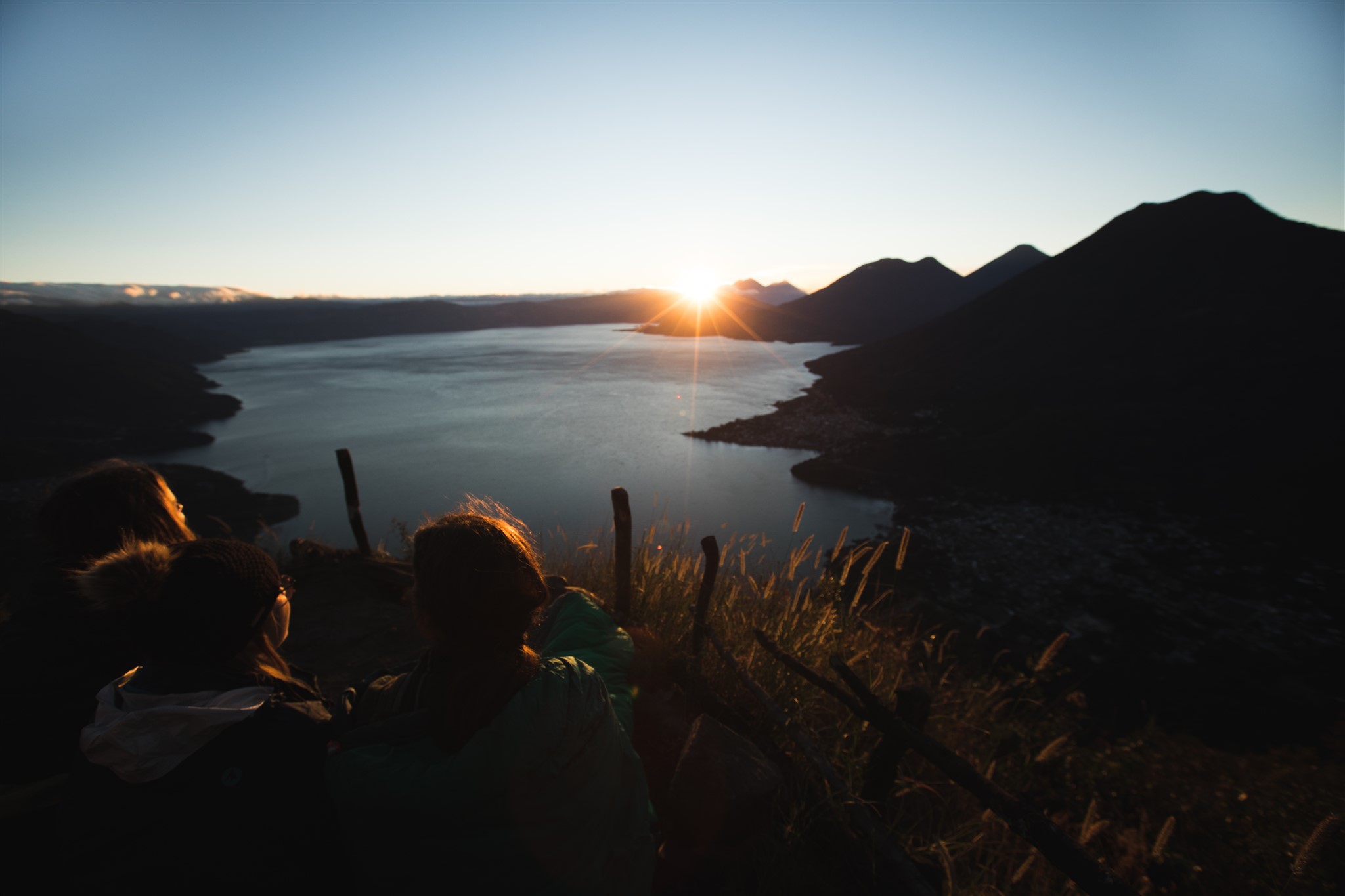
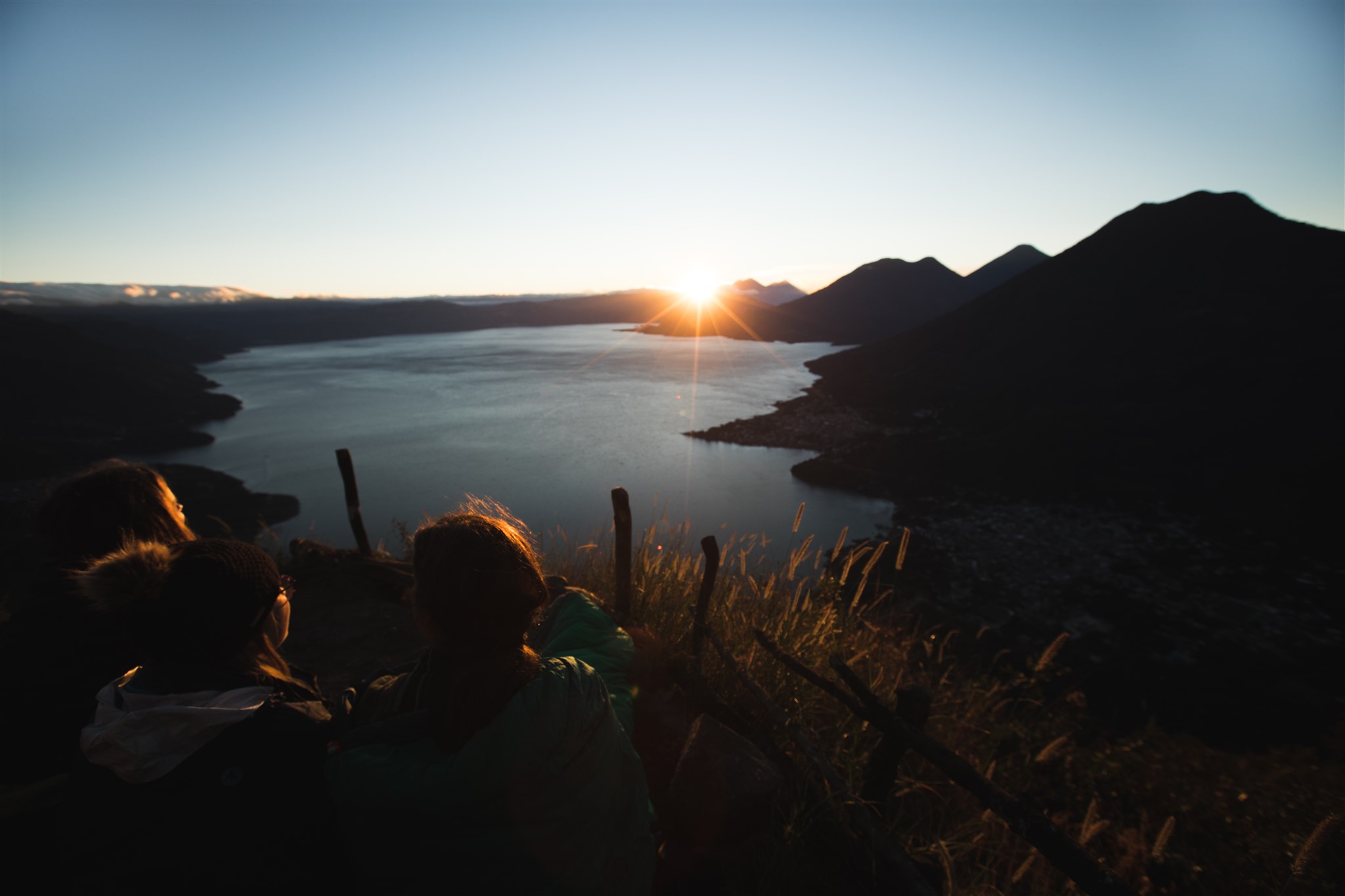
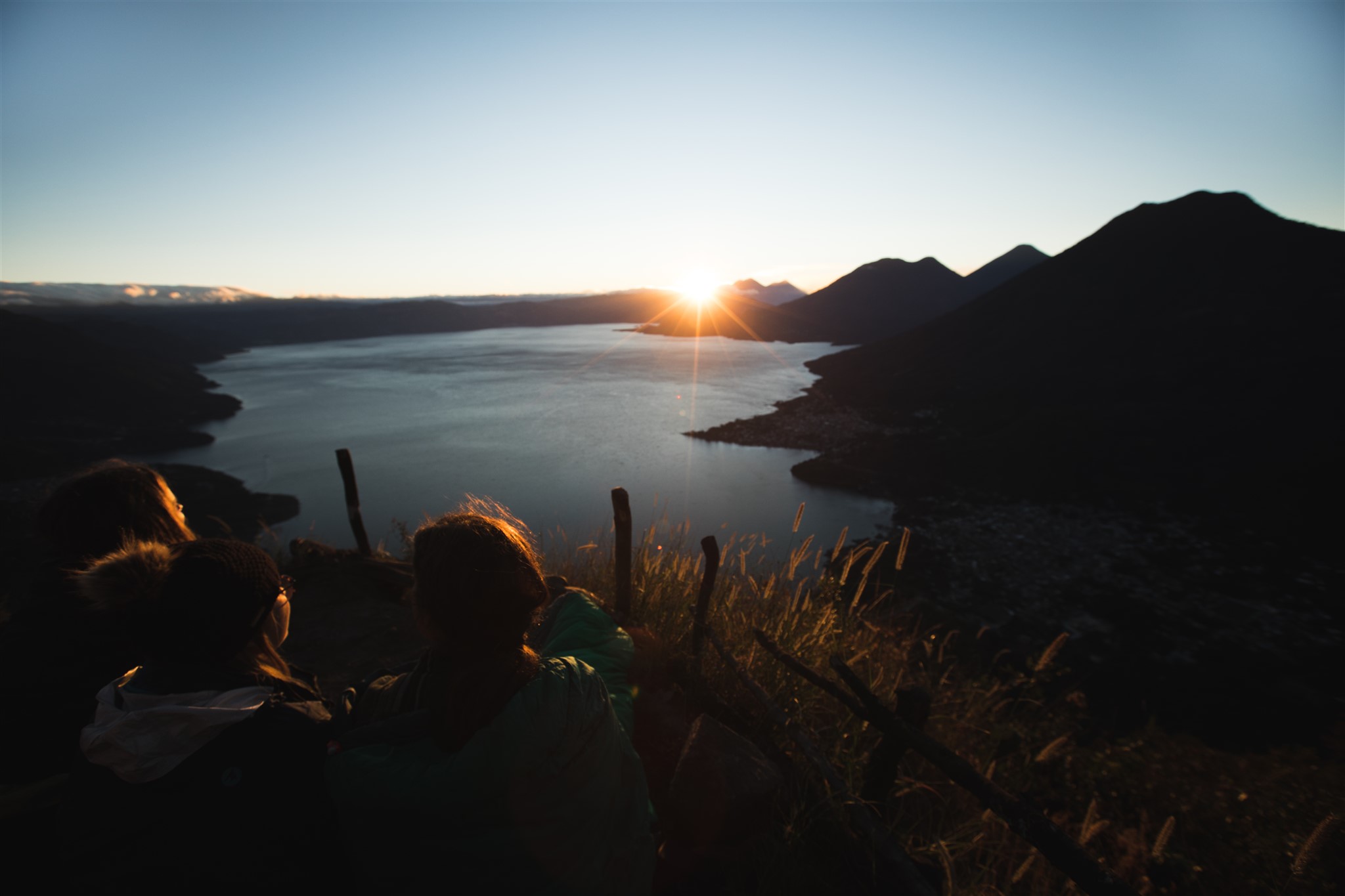
Jonathan: I am not sure this is unique to Guatemala, but when I was at Lake Atitlán, there were many Catholic celebrations taking place because of a Catholic holiday. In the streets, there was a parade-like procession where the priest carried the Eucharist, along with statues of various saints. What made these saints different was that they were adorned with Mayan decorations, showing religious syncretism in action within this culture.
Iris: One tradition I had the opportunity to witness was the Festival de los Barriletes (Giant Kite Festival) during Día de los Muertos (Day of the Dead). I did not realize until afterward just how spiritual this tradition was. Vibrant, handcrafted kites are made from tissue paper and bamboo, with some reaching heights of up to five stories. As a spectator, I initially thought they were gorgeous tapestries and simply a fun tradition. However, there is much more meaning behind them. Some Guatemalans believe that the kites serve as a connection or bridge between the living world and the underworld. The sound of the paper rattling in the wind is also believed to send prayers. Other beliefs include warding off evil spirits and serving as a guiding light or beacon. There are many other spiritual meanings associated with this tradition as well.
Viv: The command to "love thy neighbor" has been tangibly present throughout my time in Guatemala. I have encountered a level of hospitality, kindness, and generosity that overflows into the values of a culture that truly puts the "unity" in community.
How do people's religious beliefs influence family values, relationships, community involvement, and the way they treat others?
Jonathan: The way religion and culture blend together in Guatemala often includes putting people before anything else, such as work, time, or other responsibilities. Honestly, I do not think there has been a single day when my ministry host has been on time to pick us up for ministry. While this may seem like a small thing, it demonstrates the value placed on people and relationships, which is something I do not often experience in the United States. Being part of a community is almost a necessity for living in Guatemala. The people who are Evangelical and truly have a relationship with Christ can change the communities they are part of by demonstrating a new level of hospitality that welcomes anyone in.
Iris: Due to what I would describe as a shame-and-honor mentality, combined with a fear-and-power worldview rooted in religion, I believe Guatemalans treat others with a great deal of respect, at least from what I have observed. When it comes to family life, women are usually at home caring for the children while also doing other things to generate income for the family, such as sewing, running tiendas, making tortillas, and more. Meanwhile, men are usually out working in the fields, and many struggle with alcoholism. Based on my observations during our house visits, approximately 30% of the time, when we asked mothers what we could pray for, they mentioned their husbands and their drinking habits. Additionally, I would estimate that approximately 93% of the houses we visited did not have a man present during the day.
Viv: Please refer to my previous answer. To expand further, I believe kindness can come from either a personal relationship with Jesus or from societal expectations, established precedents, and the anticipation that someone should be generous with their earthly possessions.
How does religion influence Guatemalan communities and society as a whole? For example, how does it affect social expectations, traditions, moral values, or community relationships?
Jonathan: Everyone here seems to have some sort of religious background. If you do not, you can become more of an outcast in smaller communities. In bigger cities, however, you see many more modern spiritual practices that people travel to Guatemala to experience.
Iris: Since the arrival of the Spanish, Guatemalans have experienced significant outside religious and cultural influences. I believe that being open to influence can be both good and bad. For example, this openness has allowed Mayan traditions to remain present within Catholicism. It has also made people more receptive to Evangelicals like us praying for them, even if they identify as Catholic. This is contrasted with the United States, where someone might decline an offer for prayer simply because the person offering it belongs to a different religious group.
The influence of Catholicism within a community may also provide a sense of hope, or perhaps make hope more prevalent than in communities with less religious involvement. From my experience in the community where I worked, there was a Catholic church around the corner and another one farther down the road. Most of the mothers I encountered attended one of these churches. I hardly met any who did not. I believe many of the mothers we spoke with placed a strong emphasis on family values and keeping their families connected to the church. When we asked what we could pray for, their requests were often related to their families and their desire for family members to return to the church or remain involved in it.
Viv: I believe the Conquistadors changed the trajectory of the culture and history of what is now Guatemala. Following the conquest, a healthy application of religion was damaged by greed and corruption, creating a cultural divide between biblical principles and the fear-based tactics used to maintain power. This pursuit of power extinguished parts of Guatemala's cultural identity, contributing to the present-day blending of Catholic and Mayan practices.
How have your conversations with Guatemalans about their beliefs helped you better understand the role of faith and spirituality in their culture? How has this understanding influenced the way you share the Gospel?
Jonathan: I have not had many conversations with Guatemalans that I could fully understand because of the language barrier. However, the few conversations I did have showed me that Catholicism is the most common religion here. I also noticed that some people view faith as something that is passed down through generations rather than something they actively pursue. This is very similar to how faith is sometimes viewed in the United States.
Iris: When talking with Guatemalans, I have learned that it is good to start by talking about family and what is happening in their lives. For example, asking questions such as, "How are you?", "What is your name?", or "Is this your daughter?" It is important to talk with people and show them that they are seen and that God cares about them. Depending on how long the interaction lasts, I will usually ask at the end if I can pray for them and what specifically they would like prayer for. Most of the time, their responses involve family and family health. This demonstrates how closely family and faith are connected in Guatemalan culture.
Through these interactions, I have discovered the importance of intentionality and how intentional God is with us. He continually calls us to be intentional with others and to be witnesses of His good works.
Viv: I have had to shift my perspective from asking individualistic questions to asking more family-oriented questions. This has changed the way I interact with people and given me a deeper understanding of how much identity is rooted in the family as a whole, rather than simply in an individual family member. Coming from a culture that operates more within a guilt-and-innocence dynamic, this has changed the way I approach God and understand Scripture. The story of the Prodigal Son has been one of the most culturally significant biblical stories for me since arriving here.
After further conversations and reflection, I still stand by my original claim for the most part, although I do believe that fear plays a significant role in the beliefs of more traditional communities (refer to recording).
In conclusion, during my short time in Guatemala, I cannot fully understand the interconnectedness of Mayan beliefs and Catholicism. However, I have seen evidence of this relationship through traditions like the Giant Kite Festival and through accounts of Catholic saints being dressed in Mayan clothing. Because of the language barrier and the limited time I have spent here, I recognize that I still know very little about the Guatemalan way of life. Nevertheless, the more I dig into the culture, the more interesting it becomes.
I am grateful for everything I have learned during my time here, and I am curious to see what these cultural and religious dynamics look like in other regions around the world. All in all, cross-cultural relationships and religious traditions are incredibly interesting, with so many layers to unpack. Again, I have only scratched the surface, but I hope to continue discovering, understanding, and learning along the way.
I thank the Lord, for His steadfast love endures forever.
Tags: World Race , Guatemala , CA2 , CA1 , WR3 , IC2
Related Races (5)
2027 World Race | Gap Year 27G0901 - Haven
2027 World Race | Gap Year 27G0902 - Remnant
2027 World Race | Gap Year 27G0903 - Mend
2027 World Race | Gap Year 27G0904 - Harbor